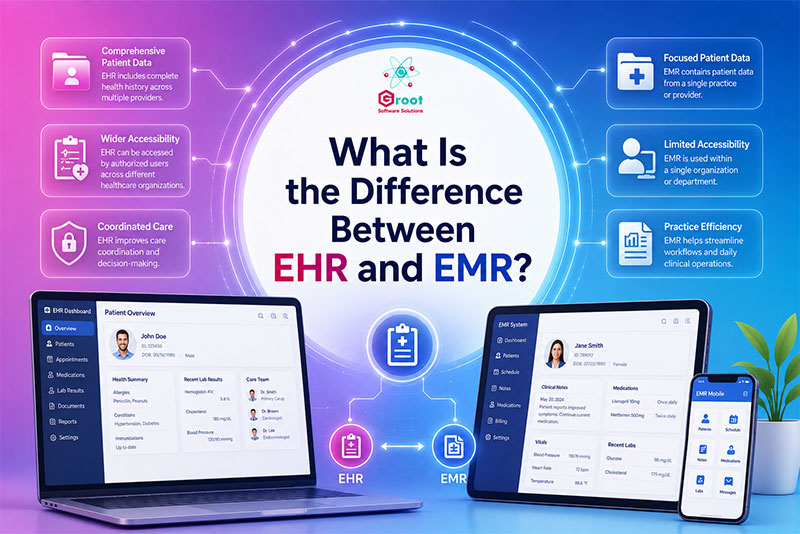
What Is the Difference Between EHR and EMR?
Key Takeaways
- EMR stands for Electronic Medical Record, while EHR stands for Electronic Health Record.
- EMR traditionally focuses on medical records within a healthcare organization.
- EHR has a broader focus on longitudinal health information and information exchange.
- EHR and EMR are sometimes used interchangeably, so buyers should evaluate actual capabilities.
- Interoperability is critical when connecting healthcare applications.
- HL7, FHIR, and healthcare APIs can support structured healthcare data exchange.
- HIPAA security involves more than adding technical security features to an application.
- AI can enhance EHR/EMR workflows when implemented with appropriate privacy, security, accuracy, and human-oversight considerations.
Ready to Build Smarter Software That Drives Business Growth?
Whether you're planning an AI solution, custom software, mobile app, or enterprise platform, our experts help you turn ideas into scalable, secure, and high-performance digital products.
✅ Free consultation. No obligation. Expert guidance.
Frequently Asked Questions
What is the main difference between EHR and EMR?
EMRs primarily manage digital medical records within a healthcare organization, while EHRs have a broader focus on longitudinal health information and information exchange across providers and care settings.
Is EHR better than EMR?
Neither is automatically better. The right solution depends on your workflows, interoperability needs, integrations, locations, scalability, and operational goals.
Are EMR and EHR the same?
Not traditionally. EMR usually refers to records used within a specific organization, while EHR supports broader health information sharing. However, modern vendors sometimes use the terms interchangeably.
Do hospitals use EHR or EMR?
Hospitals commonly use EHR platforms or broader healthcare information systems that support clinical and operational workflows. The actual capabilities matter more than the label.
Can EMR and EHR systems exchange patient information?
Yes. They can exchange information when they support appropriate interoperability technologies such as APIs, HL7, FHIR, and other integration mechanisms.
Which is more secure, EHR or EMR?
Neither is automatically more secure. Security depends on factors such as access controls, encryption, monitoring, system architecture, infrastructure, and organizational security practices.
Need Help Building an EHR or EMR Solution?
Choosing or developing the right healthcare software requires more than selecting between EHR and EMR. GrootNet Softwares can help businesses build secure, scalable, and interoperable healthcare software tailored to their workflows.